

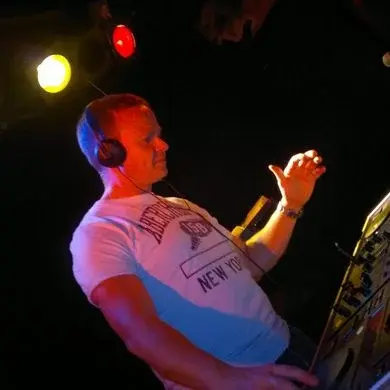
There is a specific kind of magic that happens when a DJ stops playing “tracks” and starts building a “vibe.” We’ve all been there—standing in a dark room, perhaps at a spot like Tin Tins or Branstons, where the DJ stops being a jukebox and becomes an architect.
I’ve just been listening to a new mix from my old friend and veteran selector DJ Mark M, titled “Baseline and Mashups.” While the DNA of this set is firmly rooted in the 90s, this isn’t a simple nostalgia trip. Mark M has taken the raw materials of the underground and applied a modern twist, creating a technical blueprint of how to hold a floor using a deep knowledge of how frequencies collide.
Listen to Bassline and Mashups by DJ Mark M on Mixcloud
The Philosophy of the Baseline
In the 90s, the “baseline” (or bassline) was the physical anchor of the room. It was the frequency that rattled the ribcages of clubbers and turned a simple house beat into a tribal experience.
In this mix, DJ Mark M demonstrates a deep understanding of groove-led selection. He doesn’t rely on the easy “hands-in-the-air” piano stabs that dominated the commercial charts. Instead, he leans into the darker, more rhythmic underbelly of House and Garage. By playing with the tracks and injecting a fresh energy, he focuses on that “rolling” energy—the kind of music that makes you close your eyes and just move, rather than waiting for a drop.
The “Mashup” Evolution
Today, “mashup” usually implies a digital file where someone has pre-synced a vocal from one track onto the instrumental of another. But listening to Mark M work, you can hear a more sophisticated, live element of the craft. He’s taking 90s foundations and giving them a modern, “remixed” feel on the fly.
When he drops a familiar vocal over a heavy, bubbling baseline, he’s doing it with a level of precision that feels current. He’s adjusting the pitch faders by fractions of a millimeter and EQing the low end so the kick drum punches through with a modern clarity.
This set is a masterclass in Layering. On Audio Groover, we’ve talked before about the difference between a “cut” and a “blend.” Mark M is a blender. He allows tracks to ride alongside each other for three, four, even five minutes. This creates a “third track”—a unique sonic moment that only exists for that specific mix. It’s the sound of the 90s soul meeting a modern rhythmic sensibility.
Track Selection: The “Secret Weapons”
What makes a DJ “really good” isn’t just their ability to beatmatch; it’s their record bag. Mark M’s selection here reflects a DJ who knows how to dig.
The mix weaves through:
- Speed Garage Influences: Those warped, time-stretched basslines that paved the way for the UK Garage scene, but presented here with a punchier, modern weight.
- Tough House: The four-on-the-floor foundation remains solid, but the percussion is crisper, leaning into that “New York to London” tech-house crossover.
- Vocal Hooks: This is where the modern twist shines. He takes soulful, often R&B-tinged vocals and strips them of their era-specific “cheesiness” by pinning them against aggressive, driving baselines. It’s that juxtaposition—the beautiful vocal vs. the ugly bass—that keeps the sound relevant for a 2026 dance floor.
Technical Spotlight: The Mid-Mix Pivot
From around 16:24 in this mix, Mark M executes a shift in energy that is worth studying. Many DJs make the mistake of staying at one “level” for sixty minutes. Mark M, however, understands the Arc of the Set.
He begins with a steady, hypnotic build, drawing the listener in. Once he has the “room,” he begins to introduce more complex mashups. The transitions become more daring. You can hear him playing with the EQs—isolating a hi-hat here, boosting a sub-bass there. It’s a dynamic performance that rewards “deep listening.”
A Note on the “Long-Play” Format
If there is one minor hurdle to clear with this set, it’s the sheer endurance required. In an age of rapid-fire content, Mark M delivers a marathon rather than a sprint. While the quality remains high, there’s a conversation to be had about the modern listener’s “sweet spot.”
Personally, I’ve always felt that once a mix crosses the 60 or 70-minute threshold, it risks losing that razor-sharp focus. Even the best selectors can fall into the trap of “tune fillers” just to bridge the gaps in a two-hour epic. Mark M manages the energy better than most, but I’d argue that if this were distilled into a punchy, 60-minute “A-side/B-side” format, the brilliance of those mashups would shine even brighter. In the world of audio grooming, sometimes less really is more.
Why It Matters Today
We live in an era of “The Five-Minute Magic Tweak.” We consume music in snippets. But a mix like “Baseline and Mashups” demands that you put down the phone, plug in your best headphones, and let the journey unfold.
DJ Mark M represents a generation of DJs who were “unseen architects.” He isn’t just playing old records; he’s manipulating them to create something new. This mix is a preserved piece of culture that captures the transition from 90s euphoria into the more sophisticated, basement-dwelling sounds of today.
Final Thoughts for the Audio Groovers
If you want to understand the “Birmingham Sound” or the evolution of the UK underground, you need to listen to sets like this. DJ Mark M hasn’t just put together a playlist; he’s told a story that spans decades.
Why is it so good? * Precision: The beats are locked, but they breathe with an organic soul.
- Innovation: He’s not afraid to play with the tracks, giving 90s gems a fresh perspective.
- Flow: Despite its length, the mix feels like one continuous, evolving organism.
Go over to Mixcloud, find “Baseline and Mashups,” and give it the volume it deserves. This is more than a mix; it’s a study in the evolution of the groove.
Mark M, if you’re reading this—don’t stop digging. The scene needs these frequencies now more than ever.
Follow DJ Mark M
Written by the Audio Groover Team. Stay tuned for more artist spotlights and deep dives into the vault of underground club culture.