

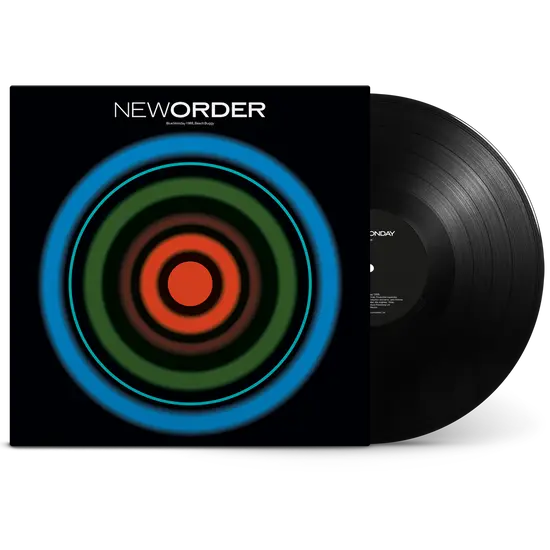
There are moments in a music lover’s life that act as “markers”—fixed points in time where you can remember exactly where you were, who you were with, and how the air felt when a certain sound hit your ears. For me, that marker was a trip to the Grand Hotel in Llandudno.
I was there with my brother and parents, surrounded by the traditional atmosphere of a classic Welsh coastal hotel. But then, the dancefloor shifted. A mechanical, driving kick drum began to thump through the room, followed by that iconic, pulsing synth line.
I didn’t know it then, but I was witnessing the birth of a tectonic shift in music history. I was hearing New Order’s “Blue Monday.”
Ahead of Its Time, Every Time
Released in 1983, Blue Monday didn’t just top charts; it tore up the rulebook. Emerging from the post-punk ashes of Joy Division, New Order utilized the Oberheim DMX drum machine and the Moog Source to create something that felt alien yet irresistibly danceable.
To the uninitiated at the time, it was a cold, industrial departure. To those of us on the floor, it was a revelation. It was the bridge between the indie-rock sensibilities of the late 70s and the burgeoning electronic dance music scene that would eventually define the 90s.
The 7-Minute Revolution
What makes Blue Monday a permanent resident in The 80s Vault isn’t just its chart success—it’s its sheer longevity. It remains the best-selling 12-inch single of all time. More importantly, it possesses a “timeless” quality that very few electronic tracks from that era can claim.
While many 80s productions can sound dated due to thin drum sounds or overly bright gated reverbs, Blue Monday remains heavy. It has a weight and a “dark disco” energy that allows it to still be dropped by modern super-DJs in Ibiza or Berlin today without sounding like a “throwback.” It holds its own against contemporary techno and house because its DNA is essentially the foundation those genres were built upon.
The Audio Groover Perspective
From a technical standpoint, the track is a masterclass in tension and release. The way the sequenced bassline interacts with Peter Hook’s melodic, high-register bass guitar is a lesson in how to fill the frequency spectrum. It’s a track that demands to be heard on a proper system to appreciate the punch of that programmed kick drum.
Looking back at that night in Llandudno, I realize I wasn’t just hearing a “hit.” I was hearing the future. Blue Monday proved that machines could have soul, and that the dancefloor could be a place of both celebration and brooding introspection.
Final Thoughts
Whether you’re a long-time crate digger or someone who just stumbled into the Vault, Blue Monday is the essential blueprint. It is the ultimate “crossover” record, and 40 years later, it still sounds like it was recorded tomorrow.
Keep the reels turning.